From Pocket to Wrist
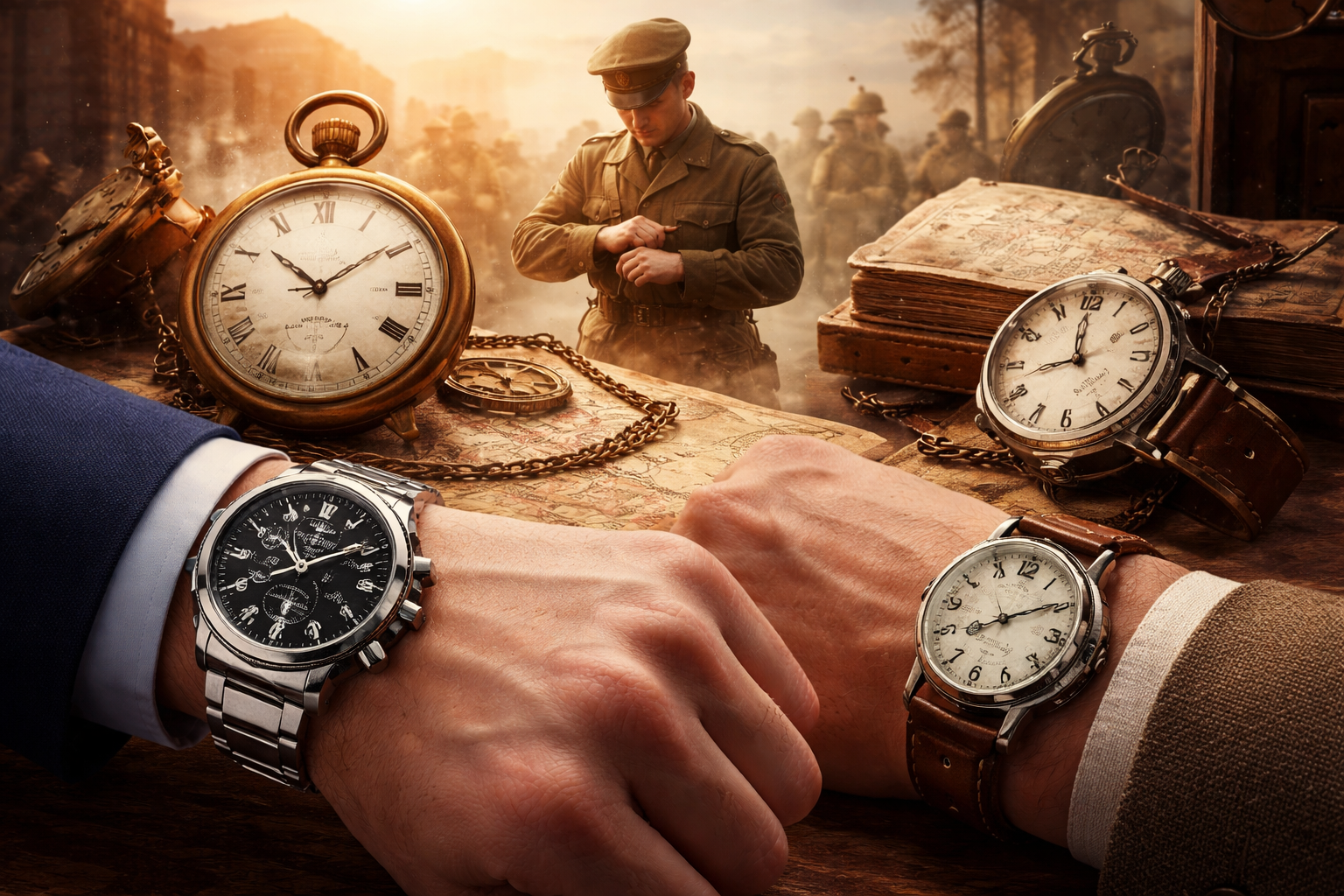
Today, the wristwatch is more than a tool—it’s a statement of craftsmanship, identity, and heritage. Whether it’s a refined dress piece peeking from beneath a cuff or a robust sports watch built for adventure, the wristwatch feels like a natural extension of daily life. But it wasn’t always this way. In fact, the journey from pocket to wrist is a fascinating story shaped by innovation, practicality, and changing social norms.
The Era of the Pocket Watch
Before watches adorned wrists, they lived in pockets. The pocket watch dominated from the 16th century through the early 20th century, symbolizing precision and prestige. Early portable timekeeping devices were worn as pendants, eventually evolving into the pocket watch—an essential accessory for gentlemen.
These timepieces were often attached to a waistcoat with a chain, carefully protected and ceremoniously consulted. Precision was improving, but portability still came with limitations. Retrieving a watch from a pocket wasn’t always convenient—especially in moments that demanded quick timing.
Early Wrist-Worn Timepieces: A Fashion for Women
Interestingly, wristwatches made their first appearances not as practical tools, but as jewelry. In the late 18th and 19th centuries, small watches were integrated into bracelets and worn primarily by women. These early wristwatches were often delicate, decorative, and considered more ornamental than functional.
Men, on the other hand, largely resisted the idea. Wristwatches were seen as too fragile and, perhaps more importantly, too feminine. The pocket watch remained the standard for men of status and utility.
The Turning Point: Military Necessity
The perception of wristwatches changed dramatically during the late 19th and early 20th centuries—especially in military contexts. Warfare demanded coordination, precision, and efficiency. Soldiers could not afford to fumble with pocket watches in the heat of battle.
To solve this, soldiers began strapping pocket watches to their wrists using improvised leather bands. These “trench watches” allowed for quick, hands-free timekeeping, which proved invaluable during synchronized maneuvers.
By World War I, wristwatches had transitioned from novelty to necessity. Watchmakers responded by designing purpose-built wristwatches with features like luminous dials for low visibility and protective grilles over the crystal. Function had officially reshaped form.
From Utility to Everyday Wear
After the war, returning soldiers continued wearing wristwatches in civilian life. What had once been seen as unconventional quickly became practical—and even stylish. The stigma faded, and wristwatches began gaining widespread acceptance among men.
Watch manufacturers seized the opportunity, refining designs and improving durability. Cases became more robust, movements more precise, and designs more versatile. The wristwatch was no longer just a tool—it was becoming a personal accessory.
The Golden Age of Wristwatches
The mid-20th century marked the golden age of wristwatches. Innovation flourished: automatic movements eliminated the need for daily winding, waterproof cases expanded functionality, and specialized watches emerged for pilots, divers, and explorers.
Wearing a watch on the wrist wasn’t just convenient—it was essential. It became a symbol of punctuality, professionalism, and taste. From boardrooms to battlefields, the wristwatch had firmly secured its place.
A Modern Symbol of Craftsmanship
In today’s digital world, where time is displayed on nearly every device, the wristwatch continues to thrive—not out of necessity, but out of appreciation. It represents mechanical ingenuity, heritage, and timeless design.
Wearing a watch on the wrist is now a deliberate choice. It speaks to those who value detail, tradition, and the art of horology. From meticulously engineered movements to finely finished cases, each watch tells more than time—it tells a story.
Conclusion
The journey from pocket to wrist was not immediate, nor inevitable. It was shaped by changing needs, cultural shifts, and technological breakthroughs. What began as a delicate accessory evolved into a rugged tool, and ultimately into a symbol of enduring craftsmanship.
Today, every time you fasten a watch to your wrist, you’re participating in a legacy that spans centuries—a quiet reminder that time, once hidden in a pocket, now lives where it can be seen, felt, and appreciated every day.
Explore Our Collection
Discover exceptional vintage timepieces and fine jewelry, each authenticated and ready to become part of your collection.
View Collection