The Story of Color
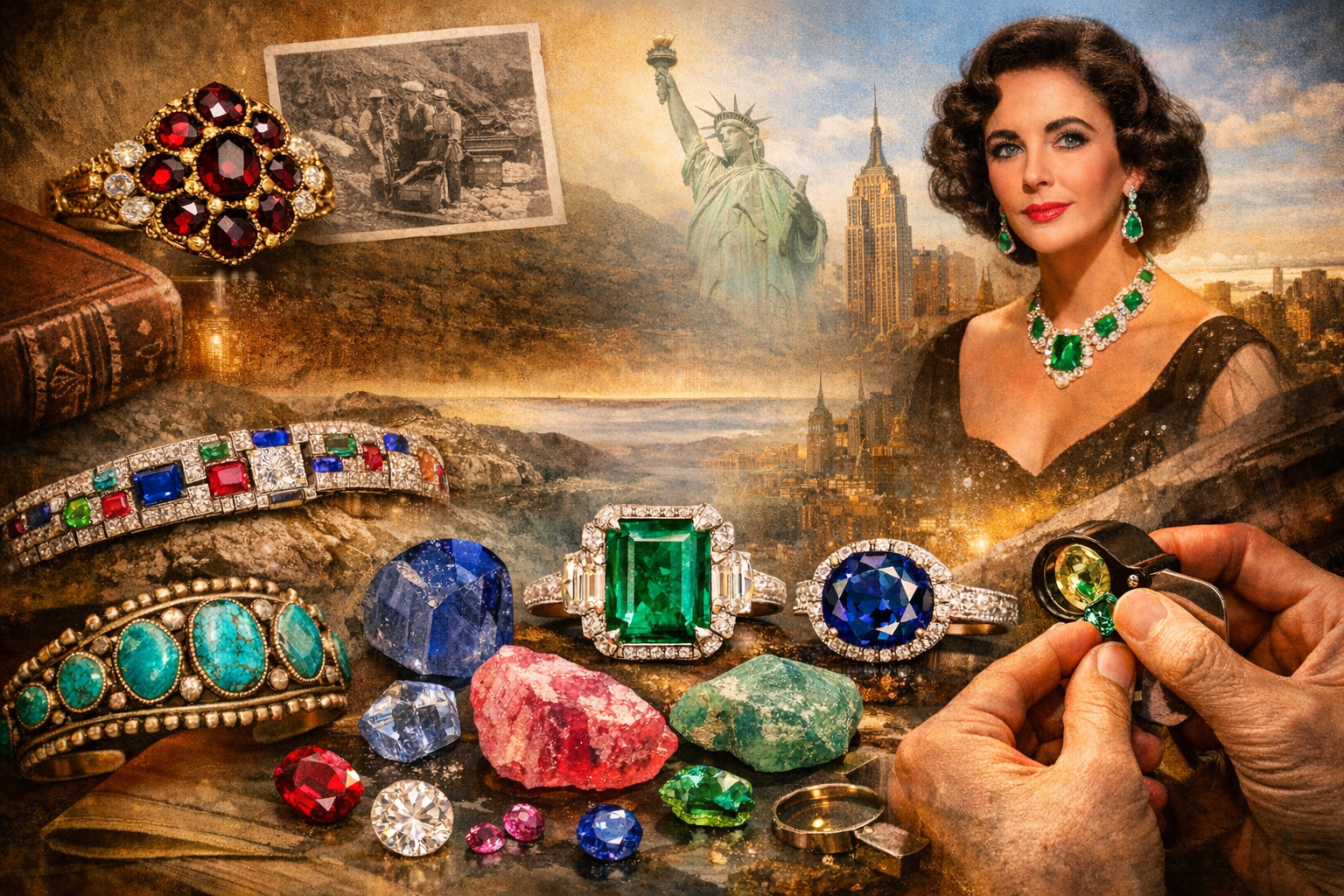
In the world of fine jewelry, colored gemstones have long offered a captivating alternative to the brilliance of diamonds. Their rich hues—deep sapphires, vivid emeralds, fiery rubies, and a spectrum beyond—carry not only aesthetic appeal but centuries of cultural significance. In the United States, the journey of colored stones reflects a broader story of discovery, craftsmanship, and evolving taste.
Early American Foundations: Modesty Meets Meaning
In the 18th and early 19th centuries, American jewelry was heavily influenced by European traditions. Colored gemstones such as garnets, amethysts, and topaz were favored for their availability and symbolic meaning. During this period, gemstones were often set in modest, handcrafted designs, reflecting both the practical limitations of early American life and the sentimental value placed on jewelry.
Victorian-era jewelry (mid-1800s) saw a shift toward more expressive use of color. Gemstones became central to storytelling—mourning jewelry, for instance, often incorporated dark stones like jet or onyx, while vibrant gems symbolized love, loyalty, and remembrance. Colored stones were no longer just decorative—they were deeply personal.
The Discovery Era: American Gemstones Come Into Focus
By the late 19th and early 20th centuries, the United States began to establish itself as a source of notable gemstones. Montana sapphires, discovered in the 1860s, quickly gained recognition for their unique range of colors—from icy blues to rare teal and green tones.
Simultaneously, California became famous for its tourmalines, particularly during the early 1900s when demand from international markets—especially China—surged. American turquoise, mined extensively in the Southwest, became an iconic element of Native American jewelry, blending cultural heritage with striking color.
This era marked a turning point: the U.S. was no longer just consuming gemstones—it was producing them.
The Art Deco Revolution: Geometry Meets Vibrancy
The 1920s and 1930s ushered in the Art Deco movement, a defining moment for colored gemstones in American jewelry design. Bold geometry, symmetry, and contrast became the hallmarks of the era. Designers embraced richly saturated stones—emeralds, rubies, sapphires—often pairing them with diamonds to create striking visual balance.
Advancements in gemstone cutting techniques allowed for greater brilliance and precision, while platinum settings elevated both durability and sophistication. Colored stones were no longer accents—they were centerpieces of modern luxury.
Hollywood Glamour: The Rise of Statement Color
Mid-20th century America saw colored gemstones step fully into the spotlight, thanks in large part to Hollywood. Icons like Elizabeth Taylor famously collected and wore extraordinary pieces featuring emeralds, rubies, and sapphires, influencing public taste and elevating colored stones to symbols of status and individuality.
This era also saw the rise of colored gemstone engagement rings, offering a bold alternative to traditional diamond solitaires. Jewelry became more expressive, reflecting personality as much as prestige.
Modern Luxury: Individuality, Ethics, and Investment
Today, colored gemstones are experiencing a renaissance in the United States. Discerning collectors and new buyers alike are drawn to their uniqueness—no two stones are exactly alike. From Montana sapphires in bespoke engagement rings to rare spinels and Paraíba tourmalines in high jewelry collections, color is once again at the forefront of design.
Equally important is the modern emphasis on ethical sourcing and traceability. Consumers are increasingly interested in where their gemstones originate and how they are mined, leading to a renewed appreciation for American-mined stones and responsibly sourced international gems.
Colored gemstones have also emerged as compelling investment pieces. With rarity, provenance, and craftsmanship driving value, these vibrant treasures offer both emotional and financial significance.
A Legacy Written in Color
From humble beginnings to high jewelry masterpieces, the history of colored stones in the United States is one of evolution, artistry, and enduring fascination. Each gemstone carries a story—of the earth, of the craftsman, and of the wearer.
At the intersection of heritage and modern luxury, colored gemstones continue to redefine what it means to wear something truly exceptional. Whether chosen for their symbolism, their rarity, or simply their beauty, they remain a timeless expression of individuality—written in color.
Explore Our Collection
Discover exceptional vintage timepieces and fine jewelry, each authenticated and ready to become part of your collection.
View Collection